
Patch #26: Ambience and agency
What ambient music teaches us about finding 'a landscape you can belong to'

For a time, while I was living in Chicago in the 2000s, I would go to see “out” improvisational jazz performances in half-legitimate venues. It wasn’t uncommon to see musicians who played for packed halls in Europe or Japan playing for twelve people in someone’s living room. The music wasn’t easy to engage with. Its lack of structure forced you to wait, patiently, for waves of agreement to emerge, build, and inevitably crash. You never knew quite what would happen, but the nature of the dynamics between musicians and the expectations of the audience meant something would. Waiting for that something to unfold was why I kept coming back to hear music many found unlistenable.
Of all the shows like this I saw, the best was in an art gallery in a loft on Milwaukee called Heaven, where I spent one February night listening to a free jazz trio. I don’t remember exactly who was playing, only that the musicians were standing in front of a wall of windows that looked out on the street below.1 At one point in the performance, the snow, illuminated by streetlights and store signs, began to fall behind the players. While I was noticing and appreciating this visual, a car playing hip-hop as loud as possible parked just below the windows of the gallery. Now the subterranean squalls merged with the sound of the jazz trio. These ingredients: the free jazz, the hip-hop beats, and the snow falling in the streetlights all combined into one experience. The musicians continued to play, but quieter, acknowledging the moment. It was, we all realized, part of the performance that no one could have predicted, and it was magical while it lasted.
In the boom-era Japan of the 1980’s, corporations like Muji, Casio, and others paid electronic musicians to compose ambient soundtracks for both products and environments. So in 1987, if you bought a Sanyo window air-conditioner, you received a free copy of Takashi Kokubo’s “Get at the wave.” And if you walked into a model home from the Misawa Home Corporation, you’d likely hear Hiroshi Yoishumora’s Soundscape 1, Surround playing in the background. Like others, I got interested in Japanese Ambient Music through the pleasing eccentricities of the Youtube algorithm and Light in the Attic’s excellent compilation Kankyō Ongaku: Japanese Ambient, Environmental & New Age Music 1980-1990
The artists featured in this compilation were heavily influenced by Brian Eno’s groundbreaking ambient records that began with 1975’s Discreet Music. Eno narrates his rationale for venturing into such music here. While he was in a hospital recovering an accident, a nurse brought a record player into the room, but she left the volume “far too low.” Eno was unable to get up to change this state of affairs, and so he listened to the lp over and over at hushed volume. Rain lashed against the windows. There must have been moments when the needle made its way through the run out groove and ticked, waiting for the nurse to come back in and flip the side. Legend has it that as the environments mixed in novel and amorphous ways, Eno conceptualized a form of music that “didn’t impose itself on your space in the same way, but created a sort of landscape you could belong to.” He began experimenting with intentionally composing this kind of music on Discreet Music and perfected the form on Ambient 1: Music for Airports and subsequent releases. Eno also developed a series of video paintings (see below) that explored similar ideas in a visual medium. He famously defined ambient music as music that was “as ignorable as it was interesting.”
During the pandemic, ambient music had a bit of a moment (for ambient music, let’s not get carried away here) as people began to focus on finding peace in their home environments and became newly attuned to music’s ability to serve as a balm for anxiety. As pointed out in the Guardian article linked above, the disappearance of live music and collective listening experiences also contributed to more solitary forms of music consumption and the surprising popularity of things like “celestial white noise” on streaming platforms. I too noticed a change in my listening habits during the pandemic. Suddenly, I found myself listening to music I’d loathed as a child: Enya, George Winston, and even Japanese multi-instrumentalist and new age composer Kitaro, who I vigorously denounced as a boy since he was a special favorite of my parents (Kitaro’s droning Silk Road cassette played nonstop in our conversion van on a three week tour of every national park west of the Mississippi in 1988).
The proportion of so-called ambient music I listen to has increased steadily since the onset of the pandemic, but I haven’t paused much to think about why. Perhaps one clue exists in a memory from April of 2020. I recall, very specifically, being alone in the house for the first time in what felt like months and trying to decide what to put on the stereo. Opportunities to listen to music without distractions had been few and far between, and now that one was suddenly presented itself, I had no idea what to play. I remember thinking that the silence in itself was as radical as any form of music. What kind of music, I wondered, would enhance my newfound appreciation for this fact? Eventually, I put on the 1997 album Substrata by Norwegian musician Biosphere. Substrata is a defiantly beatless album of deep nordic silences punctuated by field samples of crackling fire, creaking floors, and leafless trees groaning in the frozen winds. As I sat listening to all four sides of the record, I felt an enormous sense of gratitude not just for the chance to listen deeply, but for the ability to fine-tune my environment thanks to Geir Aule Jenssen’s obsessively refined compositions.
In the history of ambient music, there is a second strain of writing that focuses on the latter part of Eno’s equation — music that is interesting — and seeks to position listening with focus and attention as a radical act. This idea owes a debt to composer and musician Pauline Oliveros, who coined the idea (and practice) of deep listening, which she described as, “a way of listening in every possible way to everything possible to hear no matter what you are doing. Such intense listening includes the sounds of daily life, of nature, of one's own thoughts as well as musical sounds.” In the Oliveros construct, listening is a conscious act that plugs you into a stream of unconsciousness. In this way, it represents what is so lacking from much of our life, where everything—particularly our constant digital notifications—fights for attention.
As Isabelia Herrera points out here, a deep listening practice isn’t about checking out; it’s about tuning in. She writes, movingly, about finding ambient music as a way to endure both the pandemic and her mother’s illness. Consider her description of listening to “Iniziare” by Alessandro Cortini:
On “Iniziare,” Cortini arrests time. A single synth tone, at first bound to the earth, floats 40,000 feet in the air, spiraling into astral fragments. Ripples of electronic feedback crest into peaks and valleys of stretched echoes, decayed into hollowed abysses. Time becomes supple, pliant, disobedient. Listening to it, I am forced to close my eyes, to feel the way that sound travels over the body, shape-shifting into nonlinear drift. I am detached from any deterministic version of the future. In this place between lightness and darkness, pleasure and pain exist in equal measure. I experience all the fragmentation of life, the reminders of trauma and uncertainty I have woken up to for the last four months. Here, I refuse to let grief become self-definition: I live unfettered from the speed of emergency.
Hererra juxtaposes this type of listening against the “cartoonish” transmogrification of ambient music into a modern form of Muzak, and cites the 2017 essay by Liz Pelly The Problem with Muzak about the vacuous tyranny of Spotify’s ambient-ish playlists.
For Pelly, this music offers neither intention nor artistry in its attempts to be generally pleasing. You can surely ignore it, but there’s nothing interesting to focus on if you want to listen more deeply. As Pelly puts it:
Spotify loves “chill” playlists: they’re the purest distillation of its ambition to turn all music into emotional wallpaper. They’re also tied to what its algorithm manipulates best: mood and affect. Note how the generically designed, nearly stock photo images attached to these playlists rely on the selfsame clickbait-y tactics of content farms, which are famous for attacking a reader’s basest human moods and instincts. Only here the goal is to fit music snugly into an emotional regulation capsule optimized for maximum clicks: “chill.out.brain,” “Ambient Chill,” “Chill Covers.” “Piano in the Background” is one of the most aptly titled; “in the background” could be added to the majority of Spotify playlists.
Musos of all stripes hate this music reflexively because the more you pay attention to it, the less it offers the listener. We can certainly pine for a world where music is both ignorable and interesting—one where Music For Airports plays in our actual airports—but we know we shouldn’t hold our breath. It’s probably worthwhile to ask what need all of this ignorable music is filling. Our public spaces are increasingly beset by anxiety and uncertainty. In the actual airport and anywhere else you might find yourself waiting in public, you’re far more likely to be beset by TVs blaring CNN or Fox News and screens filled with flying chyrons and dire warnings about shootings, climate emergencies, war, and so on. As tempting as it is to disparage such screens and their ubiquity, the truth is that they are only reflections of a world where environments feel beyond our control. The pandemic exacerbated a fear of the public, but the fear-inducing trends have been with us for some time. Is it any wonder people want to disassociate and drift?
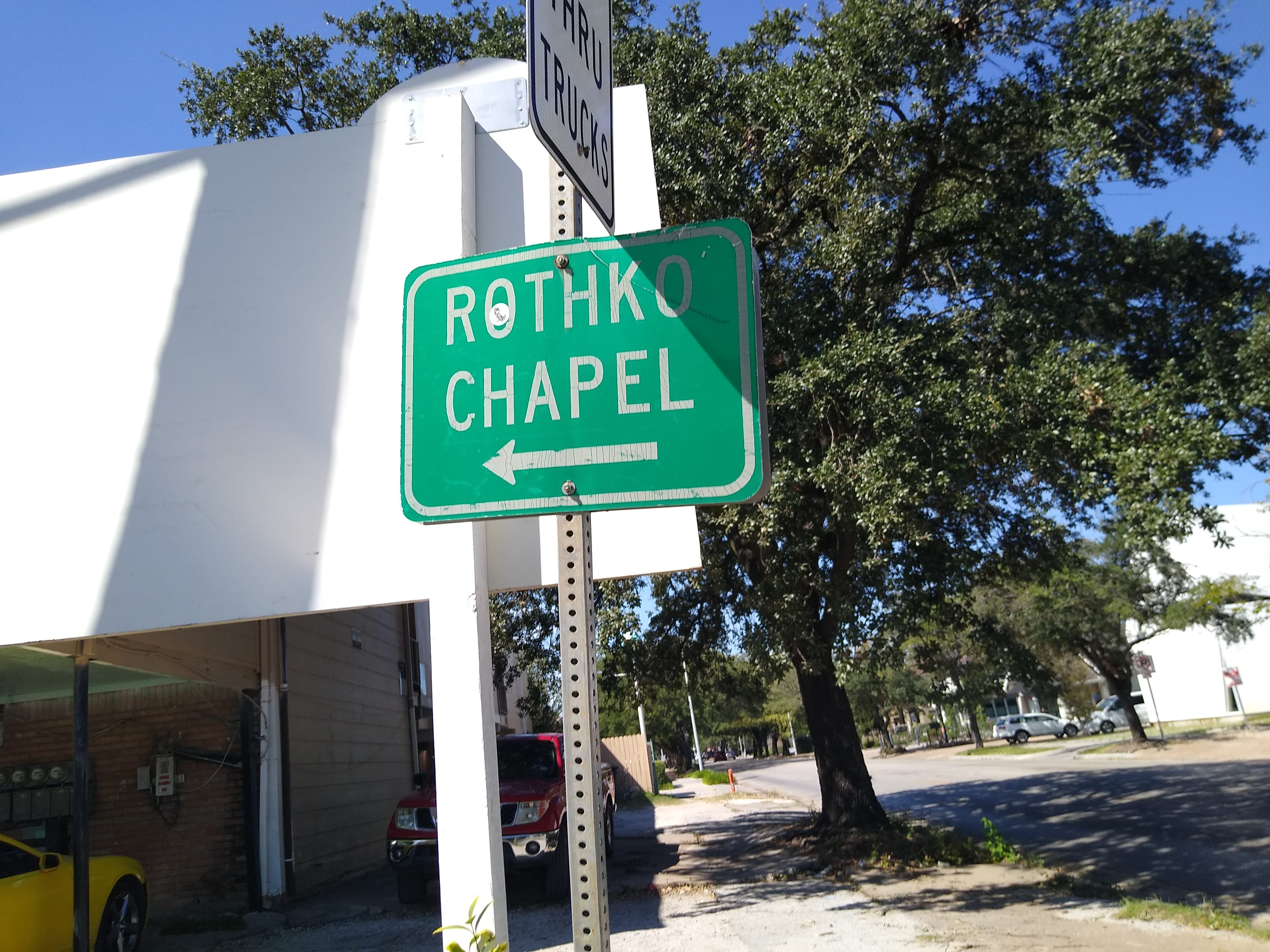
Since I have shared two peak listening experiences (free jazz in a loft, Biosphere in an empty house) I feel compelled to offer a third. Flying home from Mexico once, I found myself marooned in Houston, where torrential storms grounded flights for 48 hours. I called a friend who I sometimes went to free jazz shows with to complain about my situation. She suggested I go to the Rothko Chapel. “If it were me,” she said, “I would go to the chapel and listen to the Morton Feldman score for the opening on your headphones.” Which is exactly what I did. I remember that I began listening to the the music in the cab as we swerved around fallen tree branches, and that the dark colors of the sky and the dark colors of the paintings and the dark colors of the music all mixed into a shuddering appreciation of the depth of the work that I never would have encountered if I’d planned such a trip. I have been moved by art many times, but I can say without exaggeration that I’ve never been moved quite like that.
Writing about it now, I feel a considerable nostalgia for the mix of unpredictable ingredients that produced my most memorable listening experiences. Rather than seeing ignorable music as fodder for critical opprobrium, maybe we should see it as a cry for help. And what people really want help with, I think, is a sense of agency that does not eliminate the possibility of something happening that is beyond our control (in a good way). The brilliance of Eno’s construct — music that is as ignorable as it is interesting — is that it gives the listener a choice of how to listen and engage, thereby freeing up the sense of possibility that something might happen. In these sorts of liminal spaces, we remind ourselves how lucky we are to be alive in a world that still has the capacity to surprise us. We think of new ideas. We take chances. As Eno understood, it’s this sense of possibility that makes us feel like we belong, not just to an environment, but to the space and time where we find ourselves.
This week’s recommendations:
Reading: “He Diagnosed America’s Trust Problem. Here’s Why He’s Hopeful Now” an interview with Robert Putnam, Politico
Listening: Cloud Hidden by Susumu Yokota
Music credits for article audio:
Opening Theme: “Friendly Evil Gangsta Synth Hip Hop” by mesostic via Wikimedia Commons
Closing Theme: “Hopes” by Kevin MacLeod via Wikimedia Commons