
Patch #35: You don't know if you don't go
Becoming a ski dad

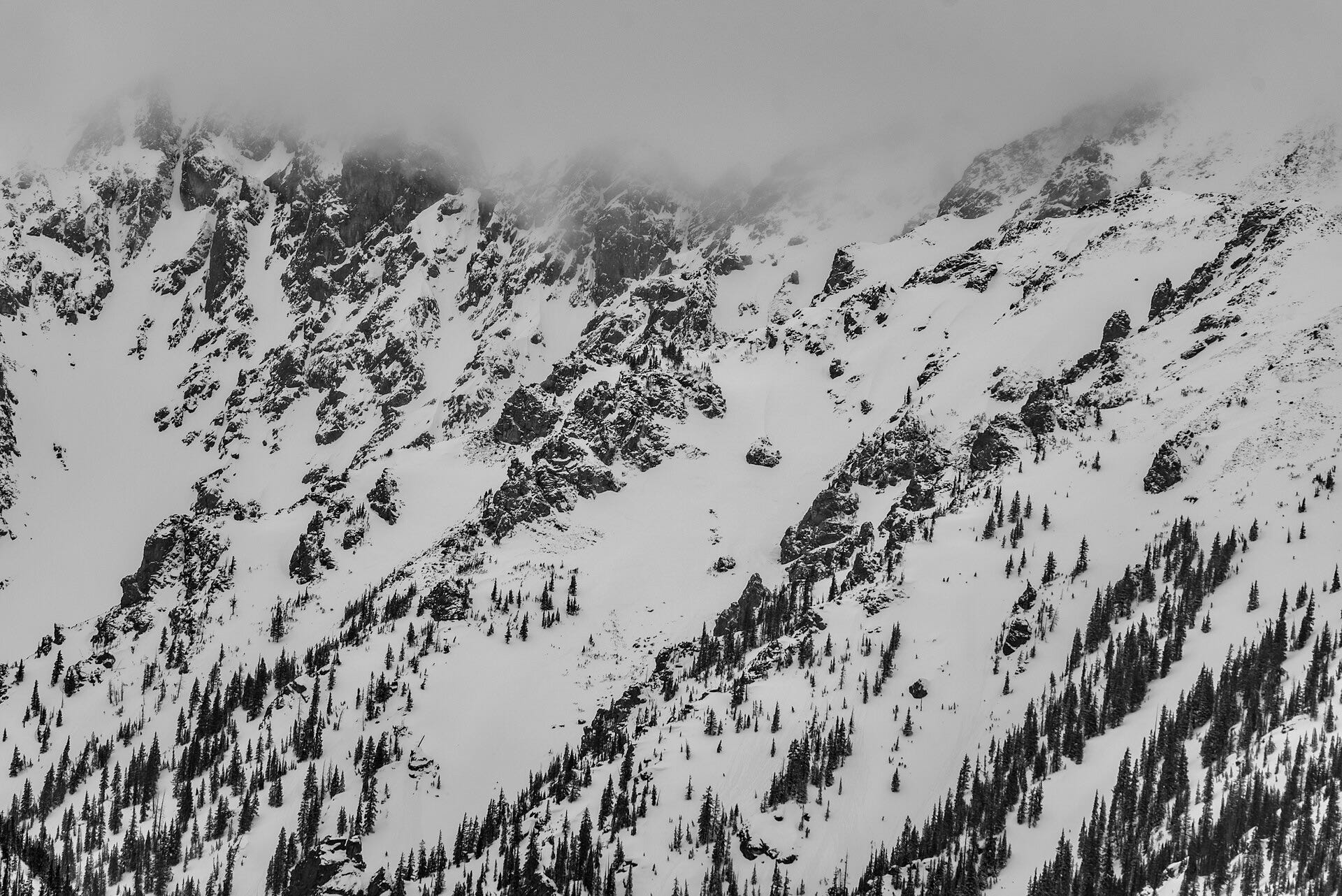
You don’t set out with any kind of precision. Your ideas are abstract, half-formed, free of any semblance of what it would actually take to sherpa small children to the top of a 10,000 foot mountain and send them down on two narrow planks precision-engineered for speed. But you’re moving to Colorado, you know that skiing is a thing, and you don’t want your daughters to be socially ostracized. You read peer-reviewed papers about irritable iPad kids who stare blankly into space when you try to engage them in conversation. Skiing is social, outdoors, and screen-free. Maybe your kids could learn? And if they’re going to learn, you should probably learn too—even though you’re forty and terrified of debilitating injury and in possession of fair-to-middling coordination. Without any kind of judicious weighing of pros and cons, you begin to make a plan.
Your new Colorado neighbors and associates speak with a certain reverence about the call of the mountains. A guy you meet at a birthday party makes his five-year-old recite their family motto, “Ski fast and take chances.” Which, true, sounds a bit intense—especially coming from a five-year-old in Spiderman pajamas—but also compelling, because the little guy says it with a kind of preternatural conviction, and maybe that’s a sign of grit: something kids will surely need in the post-apocalyptic barter economy. So you sign up for a private lesson at Copper Mountain for yourself and a group lesson for your oldest daughter, who is six, without any idea what you’re getting yourself into.
You learn about gear exchanges, season passes, lesson four-packs, boot-fittings, top-boxes, and snow tires. The socks should be thin, not thick, and cost the same as adult ski socks, even though they only use 10 percent as much merino wool. You should get poles but kids shouldn’t—even though they all really want them—because poles only get in the way. There are layers to consider, rocker profiles to puzzle over, and colors to coordinate as you assemble a grab bag of disparate layers and gear into a holistic ski fit for a child that will absolutely signal your worth to other ski parents.
The third-generation skiers you speak with at kids activities express concern. One does not, to hijack the old meme, simply take one’s children skiing. Dinner banter takes a turn. “The mountains are no joke. Do you have a system?”
“What do you mean, system?”
Once, during a Montessori school conference, a teacher walked you step-by-step through how to wash the leaves of a plant as if you were a four-year-old. Now you’re grabbing the sponge….now you’re dipping the sponge in water….now you’re gripping the leaf with gentle hands and washing it. Many descriptions of getting ready for a day of skiing has the same quality.
One mother tries to help. “The night before, I have both my boys lay out their snowman on the floor. Start with the feet. Warmies. Mid-layer. Shell. Mittens. Gaitor, balaclava, depending on the weather. Then I walk through each piece and ask if their snowman will melt or stay frozen.” She notes your confusion. “Melting is what we want,” she says. “Did you check the forecast yet?”
The forecast warns of extreme conditions and avalanche danger. The weatherman on Instagram says, with obvious pleasure, “It might get a little western.” Is that a good thing or a bad thing? Also, what, pray tell, are warmies?
Another parent is horrified you don’t have backup mittens and socks in your car already.
One parent advises using a blue Ikea bag to carry all the gear you didn’t know you needed.
Another suggests buying Smuckers Uncrustables, frozen peanut butter and jelly sandwiches from the freezer section in the grocery store that would seem ridiculous in any other context, but are somehow perfect for skiing. “Put them in their pockets frozen and the body heat will melt them to the perfect temperature.” It sounds disgusting. It is delicious.
Then the day is finally here. One Saturday in January, you wake up at 5 am, carry your six-year-old to the car wrapped in a blanket, and endeavor to engage in what Colorado families call fun. The drive, despite your new snow tires, is harrowing. Massive SUVs hurtle past you going eighty-five miles an hour down the icy curves of I-70. You’ll mention this phenomenon later and everyone will blame the much-maligned Texas tourists, noting that the rented SUVs don’t have the right kind of tires, by which they mean Nokian Hakkapeliittas or, if you must, Bridgestone Blizzaks or Michelin X-Ices. It’s important to remember these names, as it will be required of you to have opinions on tires in the future if you want something to talk about at social events.
Traffic speeds up and stops. It takes two and half hours to get seventy-five miles. It’s dark for most of the drive, but at one point dawn breaks and the mountains rush up pink and gold around you and, God help you, you feel it, that sense of awe, that tingle of here I am—a grandiose swell of unadulterated emotion that now condemns you to two decades of expensive inconvenience.
“Wow” says your daughter, who just woke up and removed the blanket covering her head. The static from the fabric makes her hair stick straight up in the dry mountain air. It occurs to you you’re on an adventure with her into the heart of the Rockies, and that this is the sort of thing she will remember about you for the rest of her life. This fills you with as pure a sense of gratitude as you’ve had since she was born. Then you slam on the brakes to avoid smashing into a rented Suburban, and your $1200 Finnish snow tires save you from certain death.
Despite the dire predictions of the weather apps and forecasters, it’s a beautiful day on the mountain. No wind. Not too cold. Not many clouds in the sky and the sun out. This is the highly fetishized bluebird day, which the gods typically arrange on your first day of skiing so that they can later punish you with howling winds and subzero windchills and other varieties of alpine torture.
You trundle your daughter to her meeting with her ski group. The instructors are impossibly cheerful, the kind of people who might excel at face-painting and balloon animal construction in lower lands. One wears costume wings and carries a fairy wand. Maybe they’re still high from the night before? Or from breakfast? You do not care, because they obviously know what they’re doing. Also, you have four hours to yourself in a beautiful place. As you walk away with your own instructor—a patient Norwegian grandmother who excels at slowing the roll of clueless newcomers—you hear your daughter shriek with delight.
You ski badly, but manage to avoid injury. “No one got hurt” is a thing you’ll learn to say if someone asks about a ski trip.
When you go to pick up your daughter, you watch her airplane down the bunny slope with a smile on her sunburned face. You make a mental note to bring sunscreen next time. In the parking lot, after navigating the shuttle to your parking spot with an Ikea bag stuffed with gear, you high-five your daughter and give her a cookie.
“We did it!” you say.
“We did it!” she says.
Soon, you’re in the routine. You buy a premium parking pass so you don’t have to take the shuttle anymore. “Isn’t that expensive?” someone asks.
“Cost of business,” you say, parroting what you heard your wife’s friend say a few weeks before about her ski season purchases.
What you learn in those early days, besides the importance of a good helmet and not, er, getting out ahead of your skis, is that there are any number of reasons not to go skiing. There is no snow. There is too much snow. There are avalanche risks. They are closing the pass to trucks carrying hazardous materials. There’s an extreme sports festival in Vail and the actual worst people in the world are flying in and they’re all wearing fur vests and Kemo Sabe hats. There is an overturned semi right before the turnoff to Winter Park and no one can get anywhere. There is a three-day weekend. Or there is a normal weekend (if you’re talking to the locals who only ski the big resorts during the week).
There are an untold number of reasons not to go skiing, and yet early on in your journey you develop a kind of holy devotion to going, and consider it a point of pride that you make it to the mountain.
Your wife does not ski. She is, in the local parlance, a ski widow. While you’re out, she goes to yoga, lights candles, takes baths, and enjoys the silence—especially when your younger daughter turns four and is old enough to also head to the mountains. But she hears things about the conditions from the other moms. “Are you tracking the weather this weekend? Won’t the roads be bad?”
“You don’t know if you don’t go,” you say with a shrug.
The response is unconscious. You have already absorbed the ethos of other ski families.
You realize you’re now the kind of person who says things like this, and that this simple motto has become something like a code, if not one as extreme as “Ski fast. Take chances.”
You ski, with children, when the windchill is twenty below. You ski in the spring when the corn turns to mashed potatoes. You ski after sleepless nights when the missed opportunities and lost chances and unfinished books run laps around your mind. Sometimes, you worry about a future where the desiccated and beetle-ravaged forests erupt in flames, the snow no longer falls, and skiing becomes an old story you tell your grandchildren (you hope you have grandchildren). You scan the information feeds that pollute your brain even after the phone is strategically placed two rooms away. You wonder why your back hurts when you sneeze. Then you sleep two hours and get up and ski because doing something feels, if not productive, then at least like a choice. You ski despite the exorbitant costs, the crowds, the obnoxious park kids in their baggy jerseys, and the relentless onslaught of alpine kitsch. Maybe it’s just better than doing nothing. The wake-up alarm sounds like a siren. Maybe, in absence of logic, it’s enough to move. The car is already stuffed with gear. The coffee is already pre-loaded. You get up and you go.
It’s a few years later. You pull into the independent resort where you now ski on Sundays to avoid crowds. Your daughters are 10 and 7 or thereabouts and you’ve been doing this for years. It’s another bluebird day. Eight inches of fresh snow the night before. More on the way. Your daughters are in their matching warmies with braided hair, and they’re bickering in the back seat. You get out of the car, stretch your limbs, and begin barking instructions. No fighting. Mid-layers. Snacks. Sunscreen. Who’s ready for boots? C’mon let’s get in a run before ski school. No whining on the mountain. You’re old enough to carry your own skis. There’s a woman in her twenties next to you with her boyfriend. They sip coffee and watch the horizon, waiting for the weather to come in. You notice she’s smiling and laughing. “My sister and I had a ski dad too,” she says. It fills you with pride. This woman thinks you know what you’re doing. Maybe you do?
Which, in some ways, feels like the end of a journey, but it turns out knowing a bit about what you’re doing is only the beginning.
It’s early April of 2025 and you’ve driven ten hours to Montana to ski a cluster of resorts in the southwestern part of the state. Your daughters don’t require much instruction anymore. This is your third trip to the same spot, and the first time the ever-elusive spring conditions cooperate with your interests. There are long ski days. Your daughters dart between trees like snowshoe hares while you try not to decapitate yourself and struggle to keep up. Once, before a morning descent through an icy bowl, you watch your older daughter lift her pole and tap it on the snow, testing the conditions before she descends. She knows, you think. When the lifts only have two seats, you sit one chair behind and watch your girls talk to each other and laugh. You snap pictures, trying to capture these moments so you can remember them later.
Early April of 2025 happens to be the peak of the great ChatGPT Ghibli craze, when the Internet collectively loses its mind over the ability to turn any old iPhone photo into a Miyazaki-style masterpiece. You are not immune. At night, after dinner, you and your daughters sit around and watch your ski snapshots transform from mediocre snapshots into Ghibli-style postcards. There is something that feels wrong about it. It took the animator Eiji Yamamori one year and three months to complete the four second crowd scene in The Wind Rises, and here you are, reclining next to a fire like a fat golden retriever, aping the style in minutes. But the emotional punch of it keeps you going. There are your daughters holding each other on the mountain. There they are showboating for the camera. There they are in the hot springs in White Sulphur Springs. There’s that antelope you saw on the side of the road. You missed the photo, but you can just tell the chat to put it back in and Ghibli it. Your daughters feel no guilt. They cheer for every new picture as the pixels slowly come into view. “We’re soooo cute!”
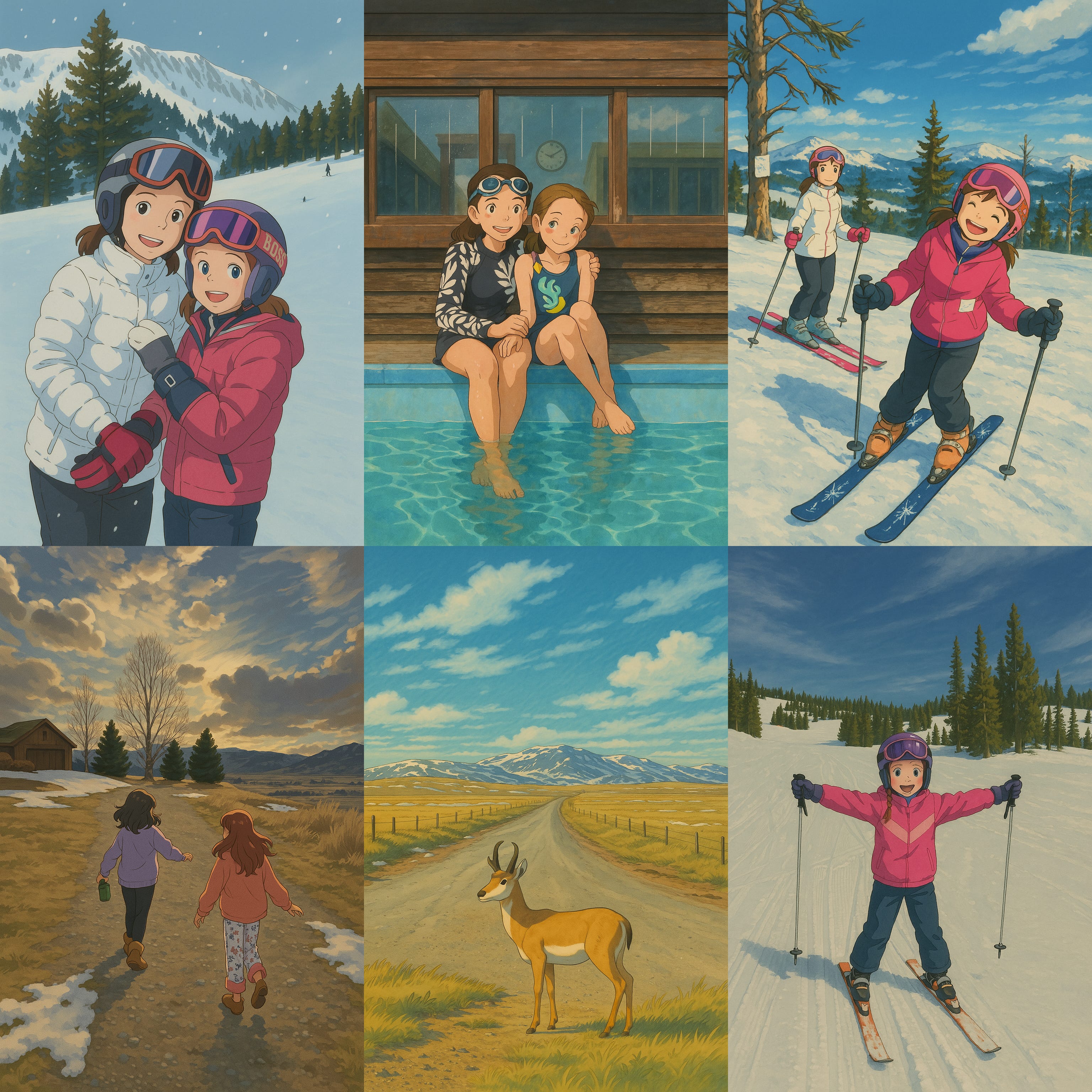
There’s something to it. Stepping away from photorealism puts a wedge of distance between you and your life, enough to make you see your reality with something like the gratitude it deserves. The landscape may be changing, but it’s still a dream world; one filled with mountains and valleys and trees. One where you can go to hot springs and family-run ski resorts. You live here. It might well get a little western, but, for now, you still get to go skiing in the west.
Recommendations:
Reading: Out Stealing Horses, by Per Petterson
Listening: Birding, by Deary
Music credits for article audio:
Opening Theme: “Cepheid Disk” by Airglow via Wikimedia Commons
Closing Theme: “Comfort in Uncertainty” by bbatv via Wikimedia Commons